




When choosing a home sauna, most people focus on the size, heater, and design. But there’s another important detail that can make a difference in your sauna experience: the type of wood used to build it.
White cedar and red cedar are two popular choices for saunas in Canada. Both are known for their natural durability, moisture resistance, and ability to withstand changing temperatures. However, they differ in appearance, aroma, and certain physical properties.
So, which is better for your home sauna? Let’s take a closer look.
1. White Cedar vs. Red Cedar: What’s the Difference?
Although both belong to the cedar family, Eastern White Cedar and Western Red Cedar are different wood species.
White Cedar (Thuja occidentalis) is commonly found in Eastern Canada. It has a light, creamy appearance, a relatively mild aroma, and a fine wood grain. Its natural resistance to decay makes it suitable for both indoor and outdoor sauna construction.
Red Cedar (Thuja plicata) is primarily found in Western Canada. It is recognized for its reddish-brown colour, distinctive cedar fragrance, and dimensional stability. Its rich appearance makes it a popular choice for traditional and luxury sauna designs.
Both materials perform well in sauna environments, but their differences can influence your final decision.
2. Appearance: Light and Modern or Warm and Traditional?
One of the most noticeable differences between white cedar and red cedar is their colour.
White cedar has a pale, natural finish that can make a sauna interior appear brighter and more spacious. Its lighter tones work particularly well with modern sauna designs, glass doors, and minimalist interiors.
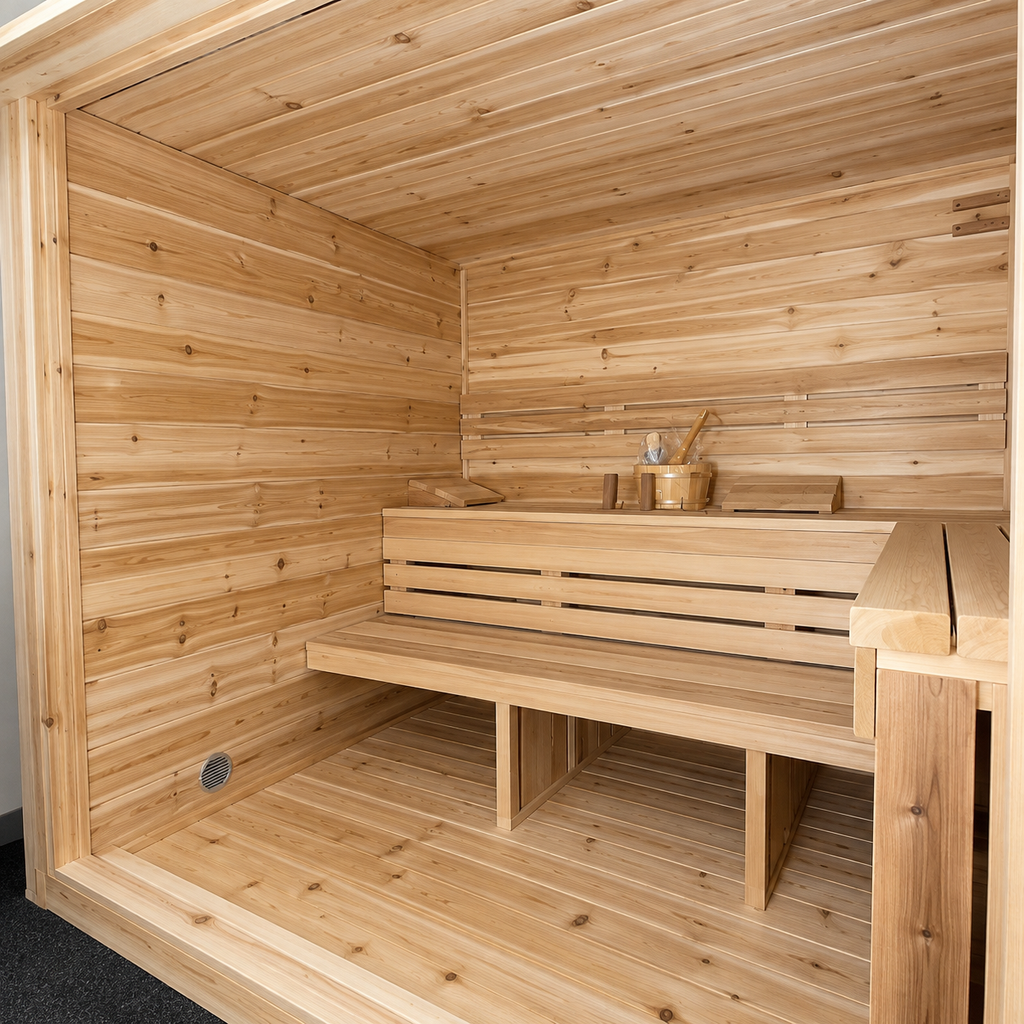
Red cedar, on the other hand, features warm reddish-brown tones that create a richer, more traditional appearance. The natural variation in its wood grain adds character and gives each sauna a distinctive finish.
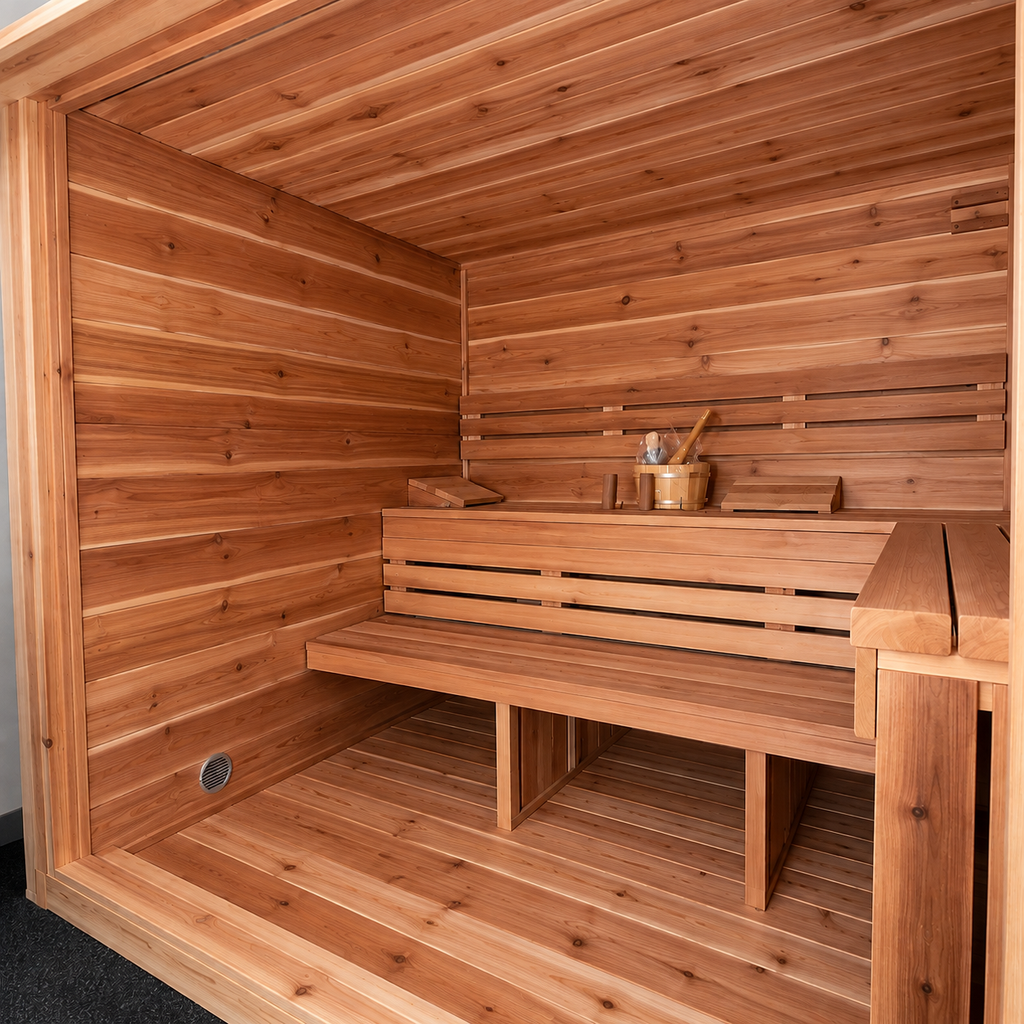
If you’re looking for a clean, contemporary aesthetic, white cedar may be your preferred choice. For a warmer, classic sauna atmosphere, red cedar is an excellent option.
3. Heat Resistance: Which Cedar Performs Better?
A common question among homeowners is whether white cedar or red cedar handles sauna heat better.
The good news is that both are well suited to high-temperature environments.
Cedar is a lightweight wood with relatively low thermal conductivity, meaning it transfers heat more slowly than many denser materials. This makes properly finished cedar surfaces comfortable for sauna seating and interior walls.
Both species also have good dimensional stability, helping reduce excessive movement as temperature and humidity change.
However, neither wood automatically makes a sauna heat faster or retain heat significantly better. Overall sauna performance also depends on wall thickness, insulation, ventilation, construction quality, and heater capacity.
For homeowners comparing different sauna heater options, choosing the appropriate heater is just as important as selecting the wood.
4. Aroma: Does the Type of Cedar Affect Your Sauna Experience?
Yes, and this is one difference you’ll likely notice during every sauna session.
Red cedar is known for its stronger, distinctive woodsy fragrance. As the sauna warms up, its natural aroma becomes part of the experience.
White cedar generally has a milder scent, making it appealing to homeowners who prefer a more subtle fragrance.
Neither is necessarily better. It comes down to personal preference.
If you enjoy the recognizable scent of traditional cedar saunas, red cedar may be the better fit. If you prefer a lighter aroma, white cedar is worth considering.
5. Durability: Which Cedar Lasts Longer?
Both white cedar and red cedar contain naturally occurring compounds that help protect their heartwood against decay.
This makes them particularly useful for outdoor saunas in Canada, where wood may be exposed to rain, snow, humidity, and seasonal temperature changes.
Western red cedar generally offers greater mechanical strength, while Eastern white cedar is lighter and softer. However, both can provide years of reliable use when properly selected, installed, and maintained.
The quality of the lumber matters, too. Clear-grade wood, proper construction, adequate drainage, and regular maintenance all contribute to the lifespan of a sauna.
Whether you’re considering an outdoor sauna or a custom indoor installation, selecting quality materials is essential for long-term performance.
6. Cost: Is White Cedar More Affordable Than Red Cedar?
In many Canadian markets, white cedar is more affordable than clear Western red cedar, although prices vary depending on wood grade, availability, and supplier.
White cedar can be an attractive option for homeowners who want the natural advantages of cedar without paying a premium for a darker finish.
Red cedar may cost more, particularly in higher grades with fewer knots.
However, wood species shouldn’t be the only factor when comparing sauna prices. Wall thickness, heater quality, seating capacity, and installation requirements can have a greater impact on the overall investment.
7. White Cedar vs. Red Cedar: Quick Comparison
| Feature | White Cedar | Red Cedar |
| Colour | Light cream to pale tan | Reddish-brown |
| Aroma | Mild cedar scent | Stronger cedar scent |
| Heat suitability | Excellent | Excellent |
| Moisture resistance | Naturally resistant | Naturally resistant |
| Wood strength | Softer and lighter | Generally stronger |
| Appearance | Bright and contemporary | Warm and traditional |
| Typical cost | Often more affordable | Often higher, especially clear grade |
| Best suited for | Light interiors and subtle fragrance | Richer finishes and stronger cedar aroma |
8. So, Which Cedar Is Better for a Home Sauna?
The answer depends on what matters most to you.
Choose white cedar if:
- You prefer a brighter, lighter sauna interior.
- You want a milder natural wood fragrance.
- You’re looking for a potentially more budget-friendly cedar option.
- You prefer a clean, modern appearance.
Choose red cedar if:
- You prefer a richer, reddish-brown wood finish.
- You enjoy a stronger traditional cedar aroma.
- You want wood with generally greater mechanical strength.
- You’re willing to invest more for a particular appearance or wood grade.
Ultimately, both types of cedar are excellent materials for home saunas. A well-built white cedar sauna can perform just as reliably as a red cedar sauna when the design, construction, and maintenance are appropriate.
Find the Right Cedar Sauna for Your Home
Choosing between white cedar and red cedar is an important part of planning your sauna, but it’s only one piece of the process.
At Sauna Depot, we help homeowners explore sauna options that suit their available space, preferred design, and everyday needs. Whether you’re planning a backyard sauna or a custom indoor installation, our team can help you find the right setup.
Explore our sauna collections at saunadepot.ca or call 877-777-9908 to discuss your project.